

Finding the right local attorney for a sexual abuse claim starts with experienced civil trial lawyers who represent survivors, work on contingency, and prioritize confidentiality. A private consultation can help you understand filing options, privacy protections, and legal deadlines without pressure.
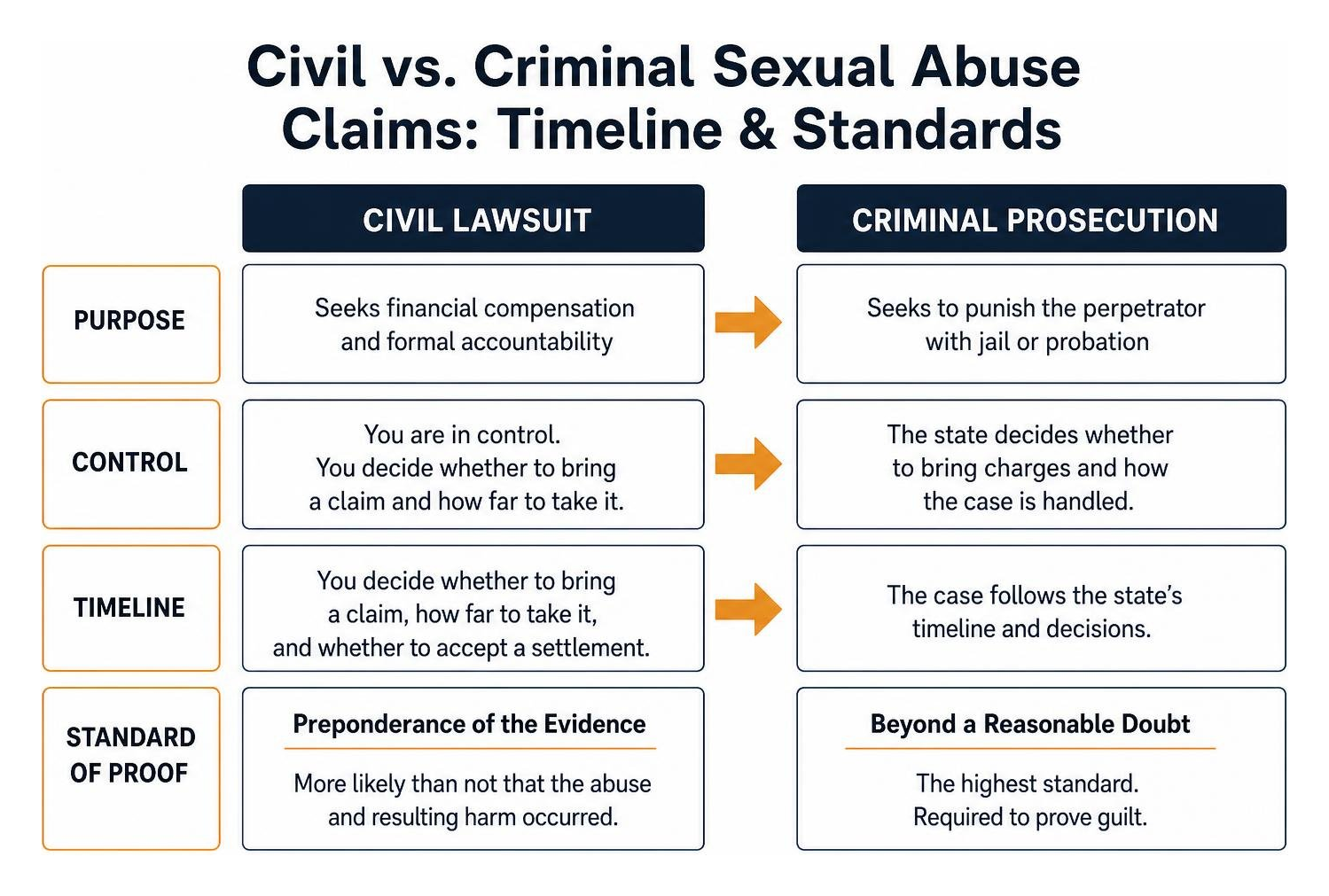
Criminal prosecutions focus on punishment. Civil litigation gives survivors a separate path to seek compensation and hold perpetrators or enabling institutions accountable.
According to RAINN, an estimated 93 percent of juvenile sexual abuse victims know their abuser personally. That familiarity can make coming forward difficult, so many survivors start by seeking confidential legal information through resources like Legal Assistance – Finding a Lawyer.
Civil Justice Without a Criminal Conviction
A civil case does not depend on a criminal conviction. Prosecutors must prove guilt “beyond a reasonable doubt,” but civil claims use the lower “preponderance of the evidence” standard. That means that, assuming statutes of limitations do not bar a claim, a civil lawsuit may still be possible even if police never made an arrest, charges were dropped, or the defendant was acquitted.
Valid Claims Across Different Abuse Settings
Predators often exploit environments where they hold power, trust, or unsupervised access. Civil claims may arise in settings such as:
- Workplaces: Employers may be liable when they ignore harassment warnings or fail to enforce safety policies, including situations involving workplace sexual assault liability.
- Healthcare facilities: Doctors, nurses, therapists, or staff may abuse clinical authority over vulnerable patients.
- Youth settings and sports: Coaches, instructors, and volunteers may exploit trust while supervisors overlook policy violations.
- Commercial properties: Landlords or business owners may fail to provide basic security measures such as working locks, lighting, or window latches.
Holding Institutions Accountable for Abuse and Negligence
Individual abusers may lack the assets to cover a survivor’s long-term medical and psychological costs. Holding institutions accountable can help survivors recover resources while forcing organizations to address unsafe policies.
Institutions owe a duty of care to the people they serve. When an organization negligently hires staff, fails to run background checks, ignores prior complaints, or covers up misconduct, it may be legally liable.
Schools, Youth Programs, and Summer Camps
Schools and youth programs must maintain safe environments for children. When administrators ignore red flags or fail to follow mandated reporting duties, the consequences can be devastating.
Institutional negligence often involves missed warnings about employees or volunteers. Public and private entities can face serious liability for neglecting student safety, including claims like those described when former CPS students sued the Board of Education over failure to prevent sex abuse. Summer camps also require strict supervision, especially in isolated settings, which makes institutional responsibility in summer camp abuse cases especially important.
Healthcare Facilities, Dioceses, and Community Organizations
Medical clinics, residential facilities, and faith-based organizations hold public trust. When leaders conceal predatory behavior, move abusers between locations, or fail to report suspected abuse, they may bear civil liability.
Civil claims against healthcare and community institutions can expose systemic failures, as reflected in cases involving a Maine clinic’s failure to report child abuse and an $8 million settlement.
How to Choose the Right Legal Help After Sexual Abuse
Selecting representation for a sexual abuse case requires care. You need an advocate with trial-ready experience, empathy, and respect for your boundaries.
When evaluating potential counsel in Maine, look for:
- Trial experience: Insurers and defense firms know which attorneys are prepared to try a case instead of accepting an inadequate settlement.
- Contingency fees: A reputable firm should not require out-of-pocket legal fees. Fees are collected only if compensation is recovered.
- Local support resources: Experienced attorneys often coordinate with advocates and survivor services, including the Maine Coalition Against Sexual Assault’s legal help resources.
Why Trauma-Informed Representation Matters
Trauma can affect memory, disclosure, and how survivors process harm. Delayed reporting or non-linear recall should not be treated as weaknesses.
A trauma-informed legal team moves at your pace, explains procedures clearly, and keeps you in control of major decisions.
What to Expect During a Free Consultation
An initial consultation is confidential and carries no obligation to file a lawsuit. During that conversation, a legal team can:
- Listen in a safe, non-judgmental setting
- Evaluate claims against the abuser and any responsible institution
- Explain deadlines and privacy options, including pseudonymous filings
- Answer questions so you can decide what comes next
Evidence, Damages, and Filing Deadlines in Civil Claims

Many survivors worry that too much time has passed or that they lack physical evidence. Civil cases are often built with contemporaneous and circumstantial records, including:
- Text messages, emails, social media messages, and voicemails
- Journals, diaries, or letters
- Counseling and therapy notes
- Internal complaints, HR records, or witness statements
- Personnel files showing prior warnings or administrative failures
Through civil discovery, your legal team can subpoena internal records the institution may have withheld.
Statutes of Limitations and Lookback Windows
A statute of limitations sets the deadline for filing a lawsuit. Historically, strict deadlines barred many childhood abuse survivors after they reached adulthood.
Many states have since extended filing deadlines for childhood sexual abuse claims or created revival windows for claims that were previously time-barred. Because these rules vary and can change, survivors should speak with an attorney who understands current Maine law and possible discovery exceptions.
Frequently Asked Questions About Sexual Abuse Lawsuits
Can I file a civil lawsuit if the abuse happened decades ago?
In many circumstances, yes. Eligibility depends on the law governing your claim, when the abuse occurred, and whether special revival or delayed-discovery rules apply. A confidential case evaluation can help clarify your options.
What compensation can survivors recover in a civil case?
Civil damages address the physical, emotional, and financial harm caused by abuse. Compensation may include therapy costs, medical care, lost wages, reduced earning capacity, pain and suffering, emotional distress, and, in egregious cases, punitive damages.
Will I have to testify publicly in court?
Not necessarily. Many civil sexual abuse lawsuits resolve through confidential settlements before trial. If litigation becomes necessary, courts may allow survivors to use pseudonyms and protective orders to limit disclosure of sensitive information.
Talk With Garmey Law About Your Legal Options
Exploring civil justice can be an empowering step. A lawsuit can hold wrongdoers accountable, expose institutional negligence, and provide support for long-term healing.
At Garmey Law, we stand with survivors through compassionate, focused, and aggressive trial advocacy. If you or a loved one needs guidance, contact our team through our Sexual Abuse & Assault practice area to schedule a free, confidential case review.